
In today’s world of advanced computing technology, it might be tempting to think that mouse pads have become obsolete. After all, modern mice are equipped with high-DPI (dots per inch) sensors, sophisticated tracking algorithms, and adaptive surface calibration. However, despite these advancements, mouse pads remain essential for ensuring consistent performance, comfort, and longevity—especially for gamers, professionals, and power users. Here’s why mouse pads still matter in the era of high-end sensors.
- Precision and Consistency
Even the most advanced optical and laser sensors rely on surface texture to track movement accurately. While high-end mice can operate on a variety of surfaces, they still perform best on those with consistent texture and reflectivity. A dedicated mouse pad provides a uniform tracking surface, reducing the chances of misreads, jitter, or cursor skipping, which can occur on reflective, glossy, or uneven surfaces like wood, glass, or metal.
For professionals in graphic design, video editing, or CAD applications, where every pixel matters, the consistency of a good mouse pad ensures precision. Similarly, competitive gamers benefit from the reliable performance that mouse pads provide, especially during fast-paced gameplay where split-second accuracy is crucial. - Enhanced Glide and Control
Mouse pads are designed to optimize the glide of the mouse across the surface. The micro-texture of a mouse pad affects how much resistance the mouse feet encounter, impacting speed and control. Smooth, hard pads offer fast glide for quick flicks, while textured cloth pads offer more resistance for fine control.
This fine-tuning of movement is something that even the most sophisticated sensors cannot replicate alone. The pad becomes part of the user’s control system, allowing them to develop muscle memory and maintain consistent performance across tasks or gaming sessions. - Protecting Your Desk and Equipment
Using a mouse directly on a desk can lead to gradual wear and tear on both the desk surface and the mouse feet. Over time, friction can cause scratches or uneven spots on the desk, which in turn affects sensor performance. Mouse pads act as a protective barrier, preserving both the desk and the mouse.
Additionally, mouse pads can extend the life of your mouse. Constant contact with hard or rough surfaces can wear down the mouse feet, leading to inconsistent glide and the need for more frequent replacements. - Comfort and Ergonomics
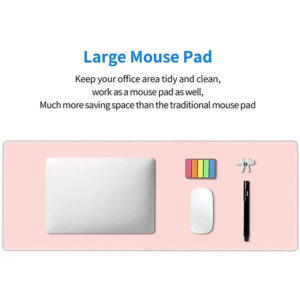
Many mouse pads are designed with user comfort in mind. Extended pads can accommodate both the keyboard and mouse, creating a uniform surface that reduces wrist strain. Some models feature wrist rests or cushioning to improve ergonomics during prolonged use.
For those who spend long hours at a computer, whether gaming or working, this added comfort can reduce fatigue and prevent repetitive strain injuries.
- Style and Customization
While functionality is key, mouse pads also offer opportunities for personalization. They come in various sizes, colors, materials, and even RGB lighting options. This allows users to tailor their workspace or gaming setup to match their aesthetic preferences.
Cixi Meiyi Home Furnishings Factory is a mouse pad factory with 28 years of experience and we have professional sales team, R&D team, QC team. Meiyee is a direct factory and we have roll mill, dispersion machine, vulcanization bed, batching machine, cutting machine, boiler, calender,heat transfer machine, foaming additives and etc. product meet CE, ROHS, REACH,CA65 standard.


Conclusion
Despite the rise of sophisticated mouse sensors, mouse pads continue to play a vital role in enhancing performance, protecting equipment, and ensuring user comfort. They are a simple yet effective tool that complements even the most advanced technology. In short, mouse pads are far from obsolete—they remain an indispensable part of a quality computing experience.

